



If you have ever signed a lease and noticed a line item for pet rent or a pet deposit, you are not alone in wondering what it is for. For property managers, the question comes from the other direction: how do I explain these charges in a way that residents actually understand and accept?
The answer is simpler than most people think. Pet fees and pet rent are not penalties for having a pet. They are a practical way for communities to remain pet-friendly while keeping housing safe, clean, and financially sustainable for everyone. They help residents and communities avoid situations where pet damage impacts everyone. OurPetPolicy works with communities everyday who have horror stories around pet management that impact communities and their tenants:
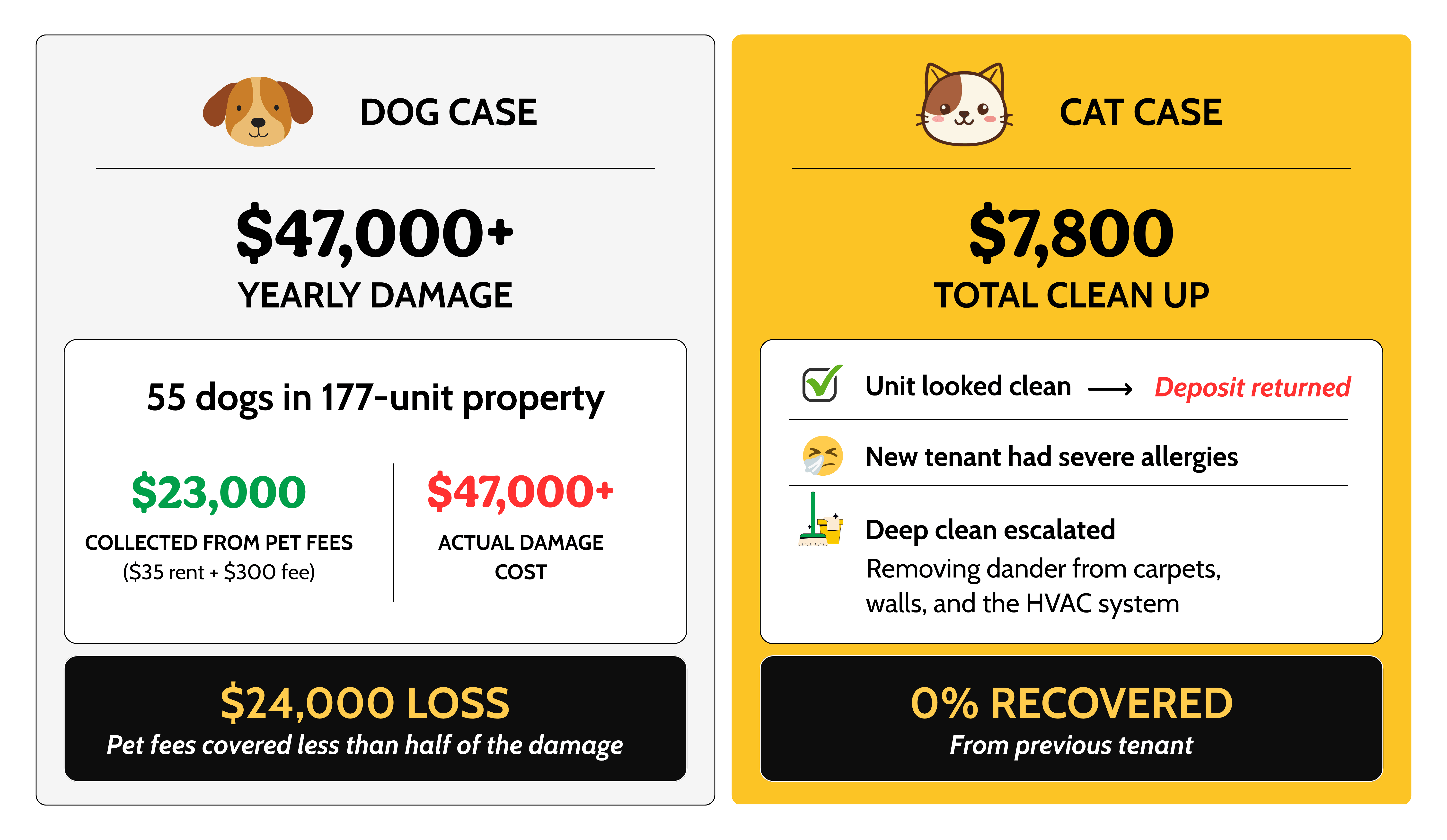
A client had 55 dogs paying pet rent in their 177 unit property who did $47,000+ in yearly common area pet damage. The property’s pet fees program only collects $23,000 in fees for these 55 pets ($35 pet rent, $300 pet fee). The property ended up incurring a $24,000 loss for the pet damage.
A property returned a cat owner's security deposit after the unit appeared clean, only to have new residents suffer severe allergic reactions to residual dander. The property ultimately spent $7,800 removing dander from carpets, walls, and the HVAC system — none of which was recoverable from the previous pet owner.
Here are 20 reasons communities charge pet fees and pet rent, and why each one benefits the entire community.
1. Additional Wear and Tear
Pets cause extra wear to flooring, doors, trim, and fixtures over the course of a lease. Hardwood floors get scratched. Carpet fibers break down faster. Common areas have increased wear and tear. Pet fees help cover the cost of restoring units to move-in condition so the next resident walks into a well-maintained apartment.
2. Enhanced Cleaning and Sanitation
Pets require enhanced cleaning beyond standard protocols — from carpets and surfaces to HVAC filters that need more frequent replacement. For residents with allergies or asthma, this isn't optional; it's a health necessity. As noted in the earlier example these costs can be significant.
3. Common Area Maintenance
Hallways, elevators, sidewalks, lawns, and shared amenities all receive heavier use in pet-friendly communities. More foot traffic means more frequent maintenance, and pet fees help fund the work that keeps these spaces enjoyable for everyone.
4. Waste Management
Pet waste stations, bags, signage, and regular servicing are ongoing operational expenses. Without them, grounds become unsanitary quickly. Pet rent provides predictable funding for these services so they never lapse.
5. Landscape Repair
Pet-friendly communities often maintain designated pet relief areas and walking zones throughout the property. These spaces experience heavier use and require additional care such as reseeding grass, soil treatment, irrigation adjustments, and ongoing upkeep. Pet fees help communities maintain healthy landscaping so outdoor spaces remain attractive and enjoyable for all residents.
6. Odor Prevention and Remediation
Even well-cared-for pets contribute to odors over time. Treating subfloor odors, replacing carpet padding, and addressing HVAC-related odor transfer all cost money. Pet fees ensure these issues are addressed before they affect neighboring units.
7. Policy Enforcement and Resident Support
Pet-friendly communities require ongoing communication with residents about pet policies, leash rules, and community expectations. Addressing concerns and resolving issues takes staff time and management resources, which pet fees help support.
8. Property Insurance
Allowing pets often increases a property’s insurance premiums. Certain breeds may trigger additional liability coverage requirements. Pet fees help absorb these increased costs so they are not passed on to all residents through higher base rent.
9. Staff Time and Support
Pet-friendly communities require additional staff time for pet registration, documentation, inspections, communication about policy updates, and responding to pet-related complaints. Pet rent helps fund the operational support that keeps the community running smoothly.
10. Regulatory Compliance
Housing providers must follow complex fair housing requirements related to service animals and assistance animals. Proper documentation, evaluation of accommodation requests, and consistent policy enforcement require staff training and administrative oversight. Pet-related revenue helps support the operational resources needed to manage these responsibilities correctly.
11. Fair Cost Allocation
Perhaps the most straightforward reason: pet fees ensure that the costs associated with pets are borne by the residents who have them, not by those who do not. This is fundamentally a fairness issue. Non-pet residents should not subsidize pet-related expenses.
12. Long-Term Property Preservation
Routine repairs and preventative maintenance help protect the long-term condition of rental homes. Addressing minor pet-related wear early prevents more expensive repairs later. Pet fees help fund this proactive maintenance approach.
13. Pet-Friendly Amenities
Dog parks, pet washing stations, and pet-centric community events all require investment. These amenities attract and retain residents who value pet-friendly living, and pet fees provide the funding to build and maintain them.
14. Turnover Downtime & Revenue Loss Mitigation
Pet-related cleaning and remediation can extend the time it takes to prepare a unit for the next resident. Pet fees help offset the operational and financial impact of longer downtimes, supporting faster readiness and minimizing vacancy loss.
15. Pet Registration and Record Management
Communities maintain records for pets including registration details, vaccination documentation, and compliance with property policies. Managing and maintaining these records requires administrative effort that pet fees help support.
16. Community Harmony
Shared living spaces work best when the costs and impacts of individual choices are distributed fairly. Pet fees reduce the friction that can arise when non-pet residents feel they are bearing the consequences of others’ pets.
17. Sustainable Pet-Friendly Policies
Without a revenue mechanism to offset pet-related costs, some communities would be forced to ban pets entirely. Reasonable fees allow properties to continue welcoming pets, which preserves housing options for pet owners.
18. Health and Safety
Clear pet policies and associated fees set expectations for responsible ownership. When residents understand the standards for pets in the community, they are more likely to follow them, helping maintain a positive living environment for everyone.
19. Predictable Budgeting
Pet rent provides a consistent, recurring revenue stream that allows property managers to plan for ongoing pet-related expenses without relying on one-time deposits alone. This leads to more stable, better-maintained communities.
20. Keeping Communities Pet-Friendly
Ultimately, pet fees exist to make pet-friendly living sustainable. They fund the infrastructure, maintenance, and amenities that allow communities to welcome pets. Without them, the alternative is often a no-pets policy, which benefits no one.
The Bottom Line
Pet fees and pet rent are not penalties for having an animal. They are practical tools that allow communities to remain welcoming to pets while responsibly managing the additional operational costs that come with them.
When residents understand where these funds go — maintenance, amenities, administration, and property upkeep — pet policies become easier to understand and support.
In the end, these fees help ensure that pet-friendly living remains sustainable for residents, property teams, and the communities they share.
If you manage a community and want a ready-made resource to share with your residents, OurPetPolicy offers a free downloadable guide that explains these 20 reasons in resident-friendly language. Download it here and start building trust with your pet-owning residents today.

%20(1).jpg)


