



It's Tuesday afternoon. A resident drops an ESA letter on the leasing desk. It's on clinic letterhead, signed by a licensed counselor, and it asks you to allow their dog. It looks completely normal.
At OurPetPolicy, we review thousands of ESA requests every month, and letters exactly like that one are where most mistakes happen. Not because anyone is careless, but because nobody told the person at the desk what the letter actually has to say.
This post is that explanation.
Start with what an assistance animal is
An assistance animal is an animal a person with a disability needs because of that disability. The term covers two kinds of animals:
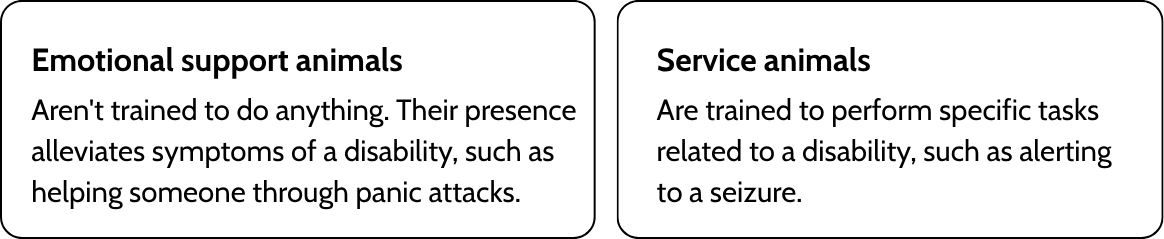
Under the Fair Housing Act, both can qualify for a reasonable accommodation. Neither is legally a pet, which is why it's worth training your team to say "assistance animal" at the desk, even when residents themselves say "pet."
The letter has to confirm a disability
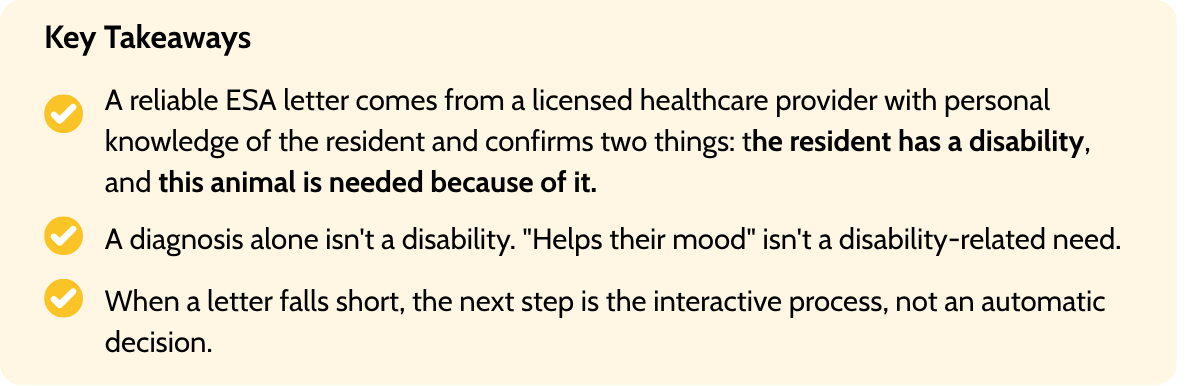
This is the part most letters miss. Under the Fair Housing Act, a disability exists when a person has a physical or mental impairment that substantially limits one or more major life activities: seeing, hearing, walking, performing manual tasks, caring for oneself, speaking, working, and similar activities.
A condition and a disability aren't the same thing. Plenty of people have anxiety that is real, diagnosed, and treated, and still doesn't substantially limit their daily life. When our team follows up on letters that name a condition without describing its impact, providers often tell us the condition is mild.
So "my patient has anxiety" isn't enough. The letter needs to say the resident has a disability, or describe an impairment that substantially limits a major life activity.
It also has to connect the animal to the disability
The second requirement is the disability-related need, sometimes called the nexus. The letter has to say this animal alleviates symptoms of the disability.
Here's wording we see all the time:
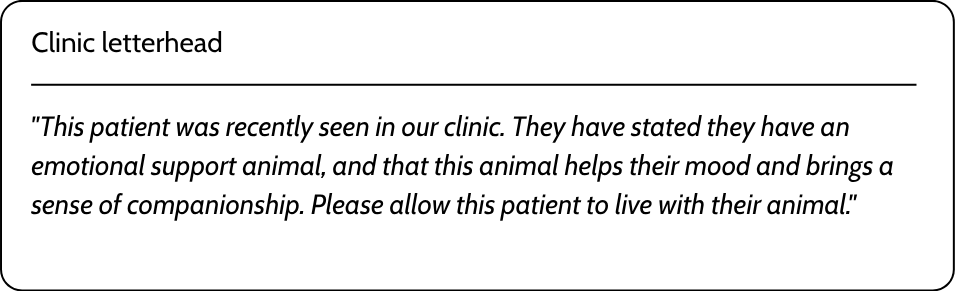
It's polite, it's on letterhead, and it meets neither requirement. As I asked the room during our ESA Verification 101 webinar: what pet doesn't help your mood? That's why people have pets.
About 6 in 10 ESA letters OurPetPolicy reviews are not reliable documentation.
Who wrote it matters too
Beyond the wording, check the basics:
- The provider is licensed and you can find their contact information
- The provider has personal knowledge of the resident, not just a questionnaire response
- The letter is a letter, not an online registration, certificate, or ID card
Registrations deserve a special mention. Anyone can enter an animal's name and photo on a registration website and pay $19 to $59, with no provider involved (OurPetPolicy review of registration websites, 2026). They aren't reliable documentation, and you don't need outside help to recognize them.
What to do when a letter falls short
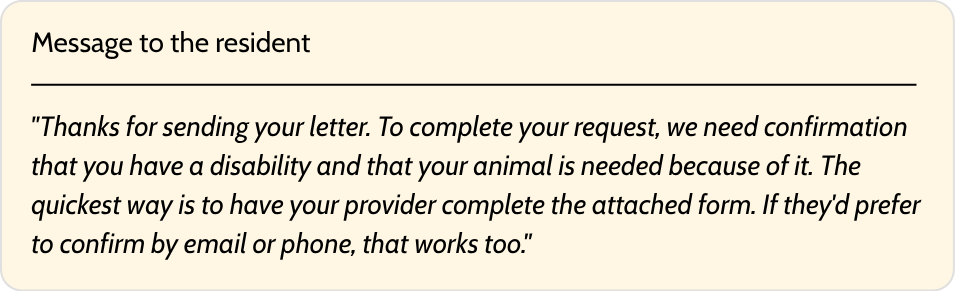
A letter that misses one of these requirements isn't the end of the conversation. It's the start of the interactive process: you explain what's missing and offer a way to provide it.
That way has to be flexible. A verification form is a great default because it's usually fastest. If the provider would rather confirm by email or phone, accept it. Processes that allow only one method are exactly what agency investigators look for.
Something as simple as this works:
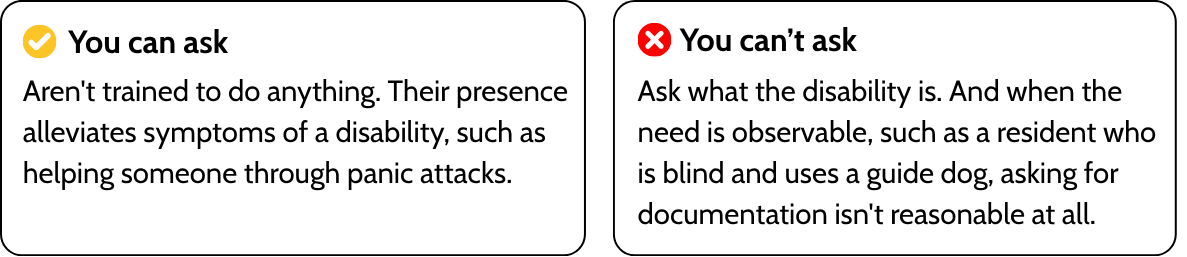
What you can and can't ask
The bottom line
A reliable ESA letter isn't about letterhead or a license number. It's about two statements: a disability, and a need for this animal because of it. Train your team to look for those two lines, and to start the interactive process when they're missing, and most of the hard calls get easier.
We put the full standard, message templates, and a one-page leasing desk checklist into a free field guide.
FAQ
1. Does a letter from a licensed provider automatically qualify?
No. A license confirms who wrote it. The letter still has to confirm a disability and a disability-related need.
2. Can we ask what the resident's disability is?
No. You can verify that a disability exists and that the animal is needed because of it, but not the diagnosis.
3. Are online ESA registrations reliable documentation?
No. Registration websites involve no healthcare provider and anyone can buy one.
4. Do ESA letters expire?
There's no national standard. If a letter has an expiration date that has passed at renewal, asking for current documentation is reasonable.
Disclaimer: For informational and educational purposes only. Not legal, financial, or professional advice. Requirements can vary by state and locality. Please consult your own legal counsel before making decisions on specific accommodation requests.


